
The real difference is how demand is managed
A tankless unit heats water as it flows, so performance depends heavily on flow rate, temperature rise and available power. A storage unit heats and stores a fixed volume, so performance depends on tank capacity, recovery time and standby control.
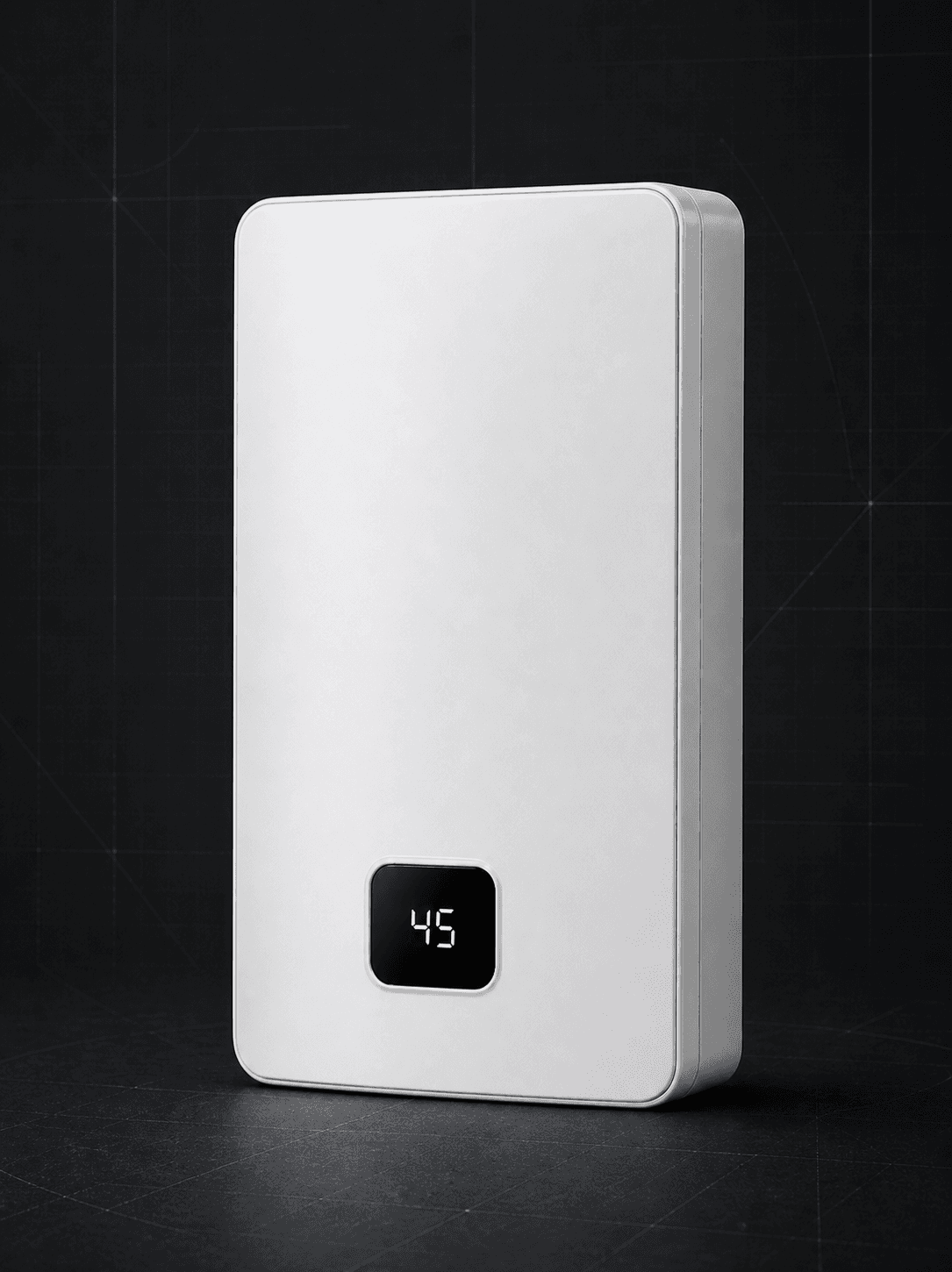
Compact installation, continuous on-demand operation and no stored volume.
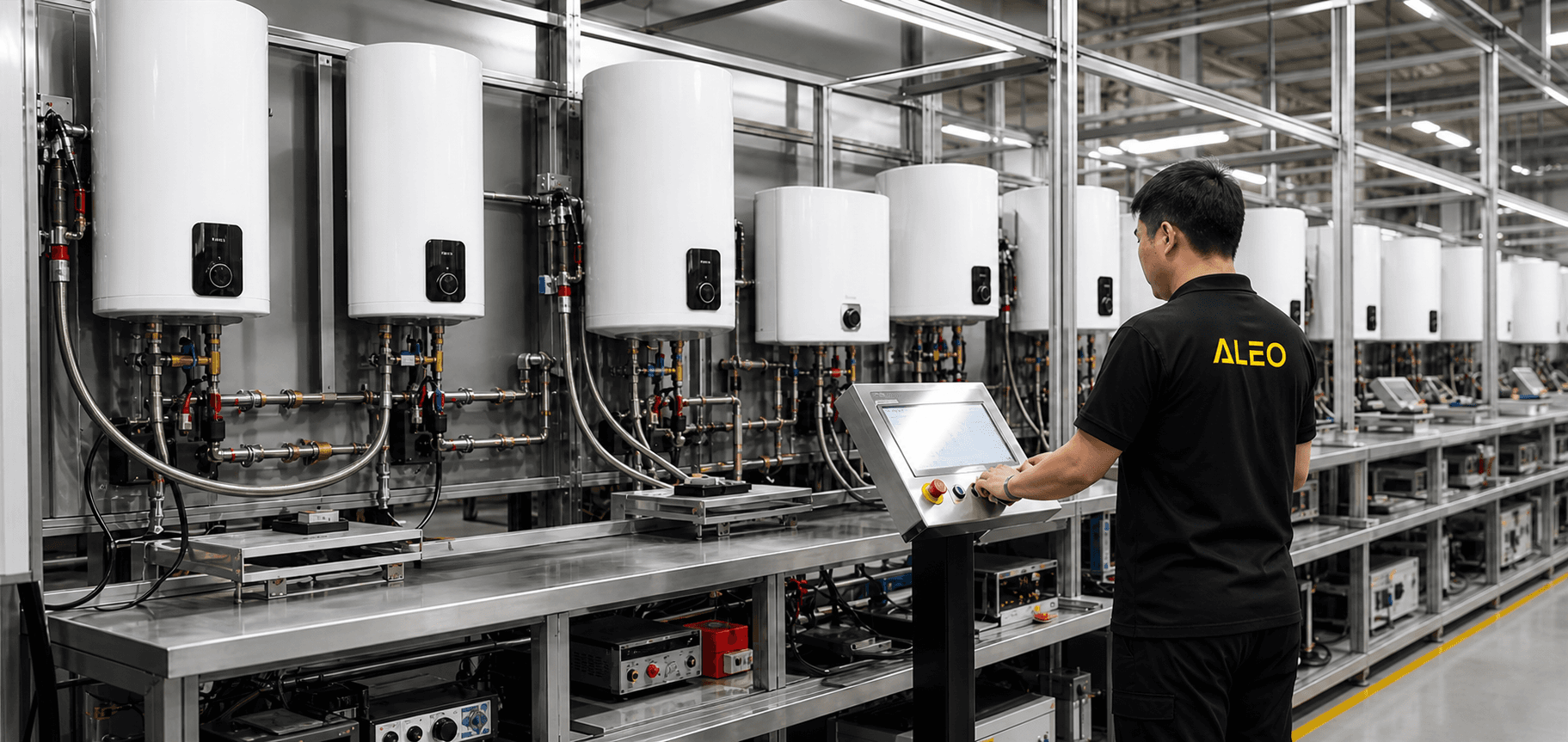
Stored peak capacity, lower instantaneous power and familiar installation practice.
Match demand, infrastructure, service skills and lifecycle expectations.
Side-by-side project comparison
| Decision factor | Tankless | Storage | Buyer question |
|---|---|---|---|
| Hot-water delivery | Heats on demand within rated flow and temperature rise | Uses stored volume, then recovers | How much simultaneous demand must be supported? |
| Electrical requirement | Usually higher instantaneous power | Usually lower input spread over heating time | What circuit capacity is available? |
| Installation space | Compact wall-mounted footprint | Needs room for tank volume and service access | Where can the product be mounted safely? |
| Demand pattern | Strong fit for controlled or continuous draw | Strong fit for known peaks and stored reserve | Is usage steady, intermittent or highly concentrated? |
| Maintenance focus | Flow path, scaling and power components | Tank condition, heating element and stored-water hygiene | What can the local service network support? |
Energy use and lifecycle cost
Tankless products avoid storing hot water, which can reduce standby loss. Storage products may require less instantaneous power and can be easier to operate where electrical capacity is constrained. Purchase price alone does not describe lifecycle value.
Compare annual operating pattern, required electrical upgrades, maintenance access and expected service life—not only unit price.
Electrical and installation fit
Tankless sizing starts with required flow and temperature rise, then checks whether the site can provide the necessary voltage, phase and circuit capacity. Storage sizing starts with peak volume and recovery time, then checks mounting space, structural support and service access.
- Electrical supplyVoltage, phase, frequency, breaker and cable capacity.
- Hydraulic conditionsInlet temperature, pressure, flow stability and hardness.
- Physical installationWall strength, product clearances, pipe route and drainage.
- Service modelInstaller familiarity, spare parts and diagnostic support.
Climate and market conditions can change the answer
Cold inlet water increases the temperature rise a tankless unit must deliver, which can reduce achievable flow or increase power demand. In markets with limited household electrical capacity, storage may be more practical. Warm climates and space-constrained buildings can create a stronger case for tankless solutions.
Best fit by application
| Application | Often favours | Why |
|---|---|---|
| Compact apartment or point of use | Tankless | Space saving and local on-demand delivery can simplify distributed layouts. |
| Household with predictable peak use | Storage | A stored reserve can cover concentrated shower demand with moderate input power. |
| Hotel or commercial project | Calculated system | Redundancy, recovery, peak demand and service continuity decide the architecture. |
| Distributor product range | Mixed portfolio | Different customer budgets, buildings and electrical conditions need different answers. |
Buyer selection framework
Confirm before quotation
- Peak flow or volume
- Temperature rise
- Available electrical load
- Installation space
- Local service capability
- 01
Describe the demand. Record users, fixtures, simultaneous use and peak periods.
- 02
Check the infrastructure. Confirm electrical supply, water conditions and mounting limits.
- 03
Model operating behaviour. Compare flow, stored capacity, recovery and standby requirements.
- 04
Validate the market fit. Review certification, installer skills, documentation and after-sales support.
When a mixed portfolio works better
Distributors do not always need to choose one technology for the entire market. A structured range can use tankless models for compact and on-demand applications while storage models cover familiar household and peak-demand use cases.
The important step is to define where each product belongs so sales teams and installers do not position one model as a universal solution.
Frequently asked questions
Is a tankless water heater always more energy efficient?
Tankless systems avoid storage standby loss, but total energy use still depends on hot-water demand, temperature rise, operating pattern and system sizing. Buyers should compare the full application rather than relying on product type alone.
Can tankless systems replace storage heaters in large projects?
They can in suitable projects, but available electrical capacity, simultaneous demand, required temperature rise, redundancy and service access must all be calculated before replacement is approved.
Which option is easier for a distributor to sell?
Storage models are familiar in many markets, while tankless models can offer a strong space-saving and on-demand proposition. The easier category is the one supported by local installation skills, electrical infrastructure and clear after-sales guidance.
Which type is more practical when electrical capacity is limited?
A storage heater is often easier to accommodate because it can heat water over time at a lower input power. The final decision still depends on recovery expectations, capacity and the available circuit.